
An Bang Beach, Hoi An
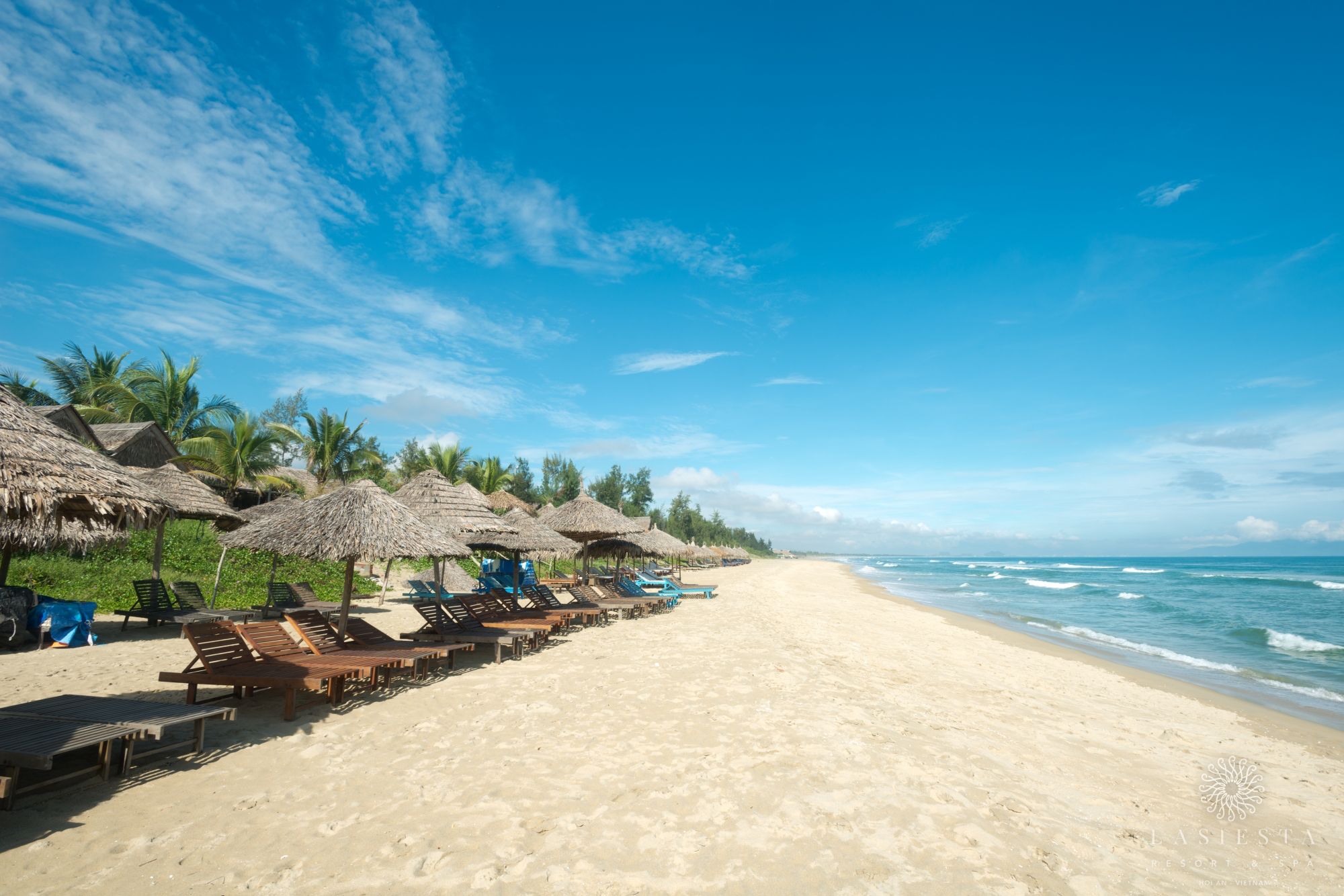
An Bang Beach, Hoi An: A Local's Travel Guide
An Bang Beach is located approximately 4–5 km northeast of Hoi An Ancient Town, in Hoi An Tay Ward, Da Nang City. It is one of the closest beaches to the Ancient Town, where the charm of a traditional fishing village remains alongside beachfront restaurants, cafés, and a variety of accommodation options.
Nguyen Phan Vinh Street runs through the residential neighborhood, connecting to dozens of narrow lanes that lead directly to the beach. These small pathways, low-rise houses, and the everyday rhythm of local life give An Bang its distinctive character, setting it apart from larger coastal resort destinations.
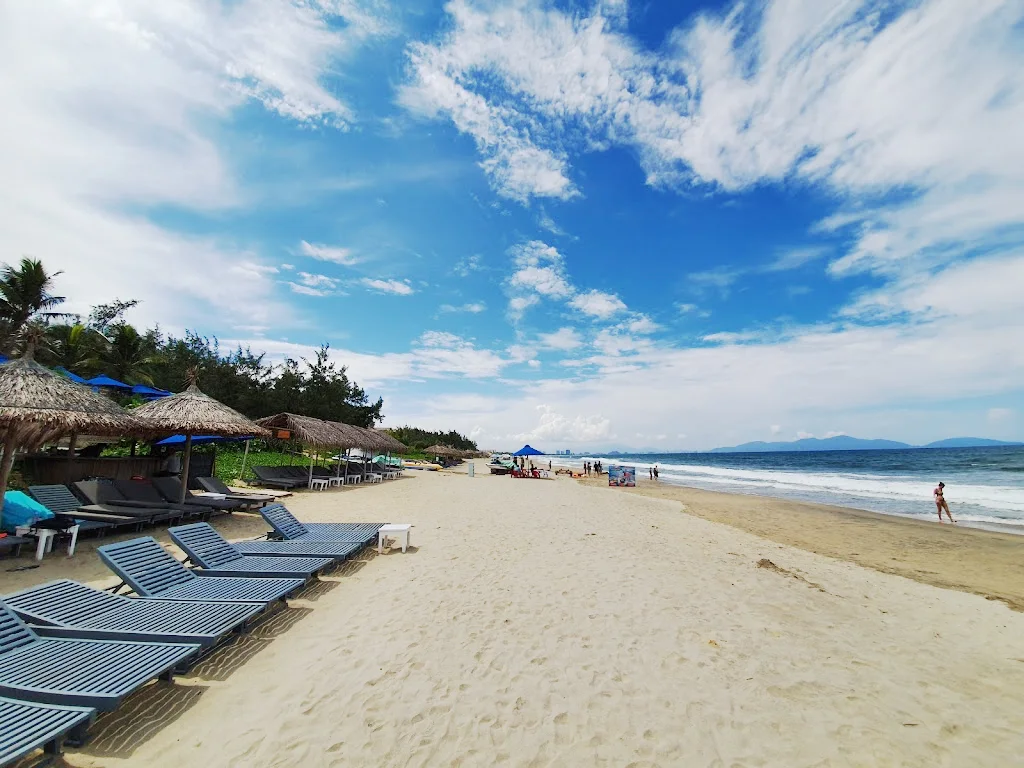
Where Is An Bang Beach Located?
An Bang Beach is currently located in Hoi An Tay Ward, Da Nang City. Before June 30, 2025, the area belonged to Cam An Ward, Hoi An City, Quang Nam Province. Following the administrative restructuring, Cam An, Tan An, and Thanh Ha wards, together with Cam Ha Commune, were merged to form Hoi An Tay Ward.
Because of this change, you may come across two different addresses when searching for information about An Bang. Some updated maps and official documents use "Hoi An Tay, Da Nang," while many travel articles and accommodation listings still refer to "Cam An, Hoi An, Quang Nam." Both addresses refer to the same area.
From An Bang Beach, getting to the Ancient Town and nearby attractions is relatively convenient.
From An Bang Beach to | Distance | Travel Time |
|---|---|---|
Hoi An Ancient Town | Approximately 4–5 km | 10–15 minutes by motorbike |
Tan Thanh Beach | 300–500 m | 5–7 minutes on foot |
Da Nang International Airport | Approximately 30 km | Around 45 minutes by car |
Cua Dai Beach | Approximately 3 km | 8–10 minutes by motorbike |
Distances and travel times are approximate and may vary depending on your starting point and traffic conditions.
How Is An Bang Different from Cua Dai and Tan Thanh?
Compared with Cua Dai and Tan Thanh, An Bang has a wider range of beachfront tourism services while maintaining a relatively intimate, low-rise coastal atmosphere. Along the beach, you'll find restaurants, bars, cafés, and small pathways connecting the shoreline to the surrounding residential neighborhood.
Cua Dai was once one of Hoi An's most popular swimming beaches. However, after years of coastal erosion, several sections of the shoreline have been reinforced with protective seawalls. Today, the area is home to a number of larger beachfront resorts.
Tan Thanh, meanwhile, lies immediately north of An Bang. It offers a quieter setting, fewer restaurants and bars, and is particularly popular with travelers planning extended stays.
Here are three key differences:
An Bang Beach: Features a public swimming beach, numerous beachfront restaurants, and beach bars. It is also the liveliest of the three beaches during summer.
Tan Thanh Beach: Offers a more peaceful atmosphere, with cafés, creative spaces, and a community of long-term international residents.
Cua Dai Beach: Home to several large resorts, with protective seawalls along parts of the shoreline and more limited public beach areas.
When Is the Best Time to Swim at An Bang Beach?
March to August is generally the best time for swimming at An Bang Beach. During these months, the weather is relatively stable, the sea is usually calm, and the water is clear, making it ideal for swimming, beach walks, and relaxing at seaside cafés.
From September onward, the weather begins to change, bringing stronger waves and occasional rain showers. In October and November, strong winds, rough seas, and murky water often make swimming unsafe. Some sections of the sandy shoreline may also change due to seasonal erosion.
Period | Sea Conditions | Travel Notes |
|---|---|---|
March – May | Generally calm seas, clear water, pleasant weather | One of the most enjoyable times of the year |
June – August | Relatively calm seas, strong sunshine, temperatures reaching 33–36°C | Peak travel season; booking accommodation early is recommended |
September | Waves begin to increase, with occasional rain showers | Swimming may still be possible when conditions are safe |
October – November | Rough seas, large waves, murky water | Swimming is not recommended when the sea is rough |
December – February | Sea conditions may gradually improve, but the water remains cool | Better suited to beach walks and enjoying the coastal scenery than swimming |
Getting Around and Parking at An Bang Beach
Nguyen Phan Vinh Street is one of the main access roads to An Bang Beach. From here, you can turn into numerous narrow lanes, including lanes 150, 164, and 174, as well as other small pathways leading toward the beach.
Most homestays, entire-house rentals, and small villas are located within these lanes rather than directly on the main road. This gives many properties a greater sense of privacy, but it also means that car access can sometimes be limited.
There are three things worth knowing before visiting An Bang:
Many lanes are narrow, making access difficult for larger vehicles. If you're traveling in a seven-seater vehicle or larger, check parking arrangements with your accommodation provider in advance. Some properties allow vehicles to stop directly outside the entrance, while others require a short walk from the beginning of the lane.
Motorbike parking is available near the public beach. You can find parking areas close to the beach access points at the end of Nguyen Phan Vinh Street, usually for a small fee.
A motorbike is a convenient way to travel between An Bang and the Ancient Town. The journey is only around 4–5 km, making it practical for daily trips. However, during the rainy season in October and November, taxis or covered transportation may be a better option.
Where to Stay at An Bang Beach
Accommodation at An Bang Beach mainly consists of entire-house rentals, small villas, homestays, and apartments tucked away in narrow lanes near the beach, rather than high-rise hotels. This is one of the area's defining characteristics, with many properties located among local homes and maintaining a relatively small scale.
Depending on your group size and preferred holiday style, you can choose from several accommodation types:
Groups of 2–4 guests: Studios or small apartments, often located along quiet lanes, suitable for couples and small groups of friends.
Families of 5–8 guests: Entire-house rentals with 3–4 bedrooms, kitchens, and shared living areas where the whole family can relax comfortably.
Groups of 9 guests or more: Villas with 5–6 bedrooms, many featuring private swimming pools, ideal for larger groups of friends or multi-generational families.
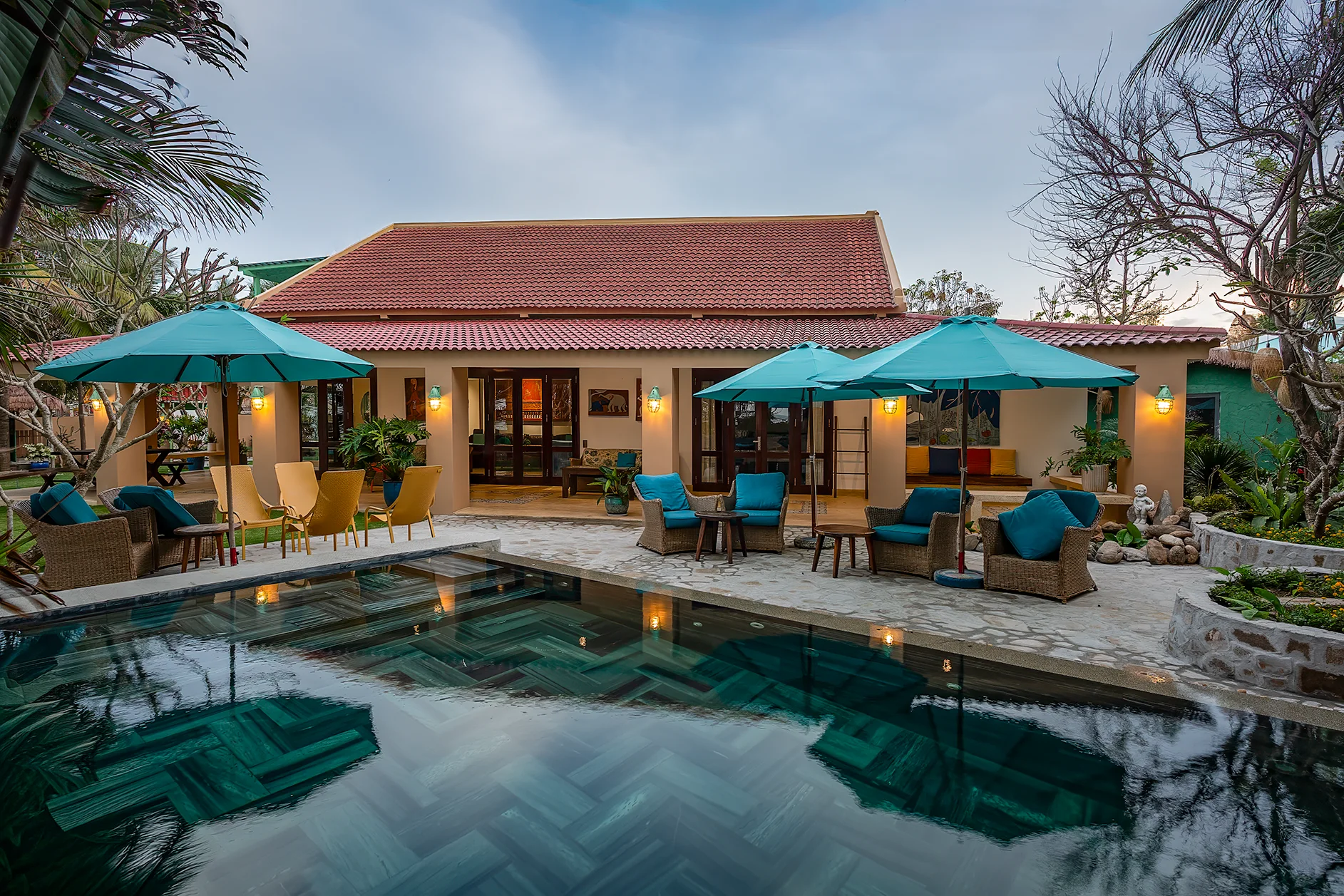
Flow House – A 3-Bedroom Stay Near An Bang Beach, Hoi An
Among the entire-house accommodation options in An Bang, HÙA Homes manages several properties located along lanes 150, 164, and 174 off Nguyen Phan Vinh Street.
The properties vary in size, from 88 Steps Villa, a four-bedroom villa approximately 50 m from the beach, to May Villa, a six-bedroom property arranged across two separate buildings, making it suitable for larger groups.
What these properties have in common is their kitchens and garden spaces, offering comfortable shared areas for families and groups of friends. They are particularly well suited to travelers who enjoy spending time together, preparing their own meals, and experiencing a beach holiday at their own pace rather than staying at a traditional resort.
Where to Eat at An Bang Beach
Food is another enjoyable part of exploring An Bang. Around the public beach and along Nguyen Phan Vinh Street, you'll find a variety of dining options, from simple local eateries to beachfront restaurants and bars.
Generally, dining options in the area fall into three main categories:
Beach bars right on the sand: Ideal for enjoying grilled seafood, ordering a drink, and taking in the ocean views. Many stay open into the evening, creating a lively atmosphere on pleasant days.
Local eateries tucked away in the lanes: You can find chicken rice, Mi Quang noodles, banh mi, and other familiar Central Vietnamese dishes. Prices are often more affordable than at restaurants directly on the beachfront.
International restaurants: A variety of international dining options cater to overseas visitors, with a particularly good selection toward the Tan Thanh area.
How to Spend a Day at An Bang Beach
If you have a full day at An Bang, there's no need to plan an overly packed itinerary. Simply arranging your activities around the different times of day will allow you to enjoy both the beach and the local way of life.
6:00–7:00 AM – Watch the sunrise over the sea: This is one of the most beautiful times to experience An Bang. The beach is still peaceful, the air is cool, and you may see local fishermen returning to shore in their traditional basket boats.
9:00–11:00 AM – Swim and relax: The morning is a pleasant time to enjoy the beach before the sunshine becomes too intense. You can go swimming when conditions are safe or unwind at a beachfront café.
12:00–3:00 PM – Enjoy lunch and escape the midday heat: This is usually the hottest part of the day. Stop by a local eatery along one of the small lanes, then return to your accommodation for some rest.
4:00–6:00 PM – Enjoy the late afternoon by the sea: As temperatures become more comfortable, head back to the beach for a walk or a swim, or take a short ride into Hoi An Ancient Town.
After 6:00 PM – Dinner and relaxation: Choose a beach bar on the sand for dinner, or prepare a meal with family and friends if you're staying in a villa or entire-house rental.
Three Common Misconceptions About An Bang Beach
Although An Bang is a well-known destination, there are a few things first-time visitors may misunderstand. Knowing these details in advance can help you choose suitable accommodation and plan a more comfortable stay.
An Bang is not a private resort beach. It is a residential coastal neighborhood where local people continue to live, shop, and work in the fishing industry. Alongside the holiday atmosphere, you may also hear public announcements, passing vehicles, or fishing activities in the early morning.
Not every property advertised as "near the beach" is just a few steps from the sand. Some lanes in An Bang are long and winding. Before booking, ask for the actual walking distance in meters rather than relying solely on descriptions such as "beachside" or "near the beach."
You can still visit An Bang during the rainy season, but swimming may not be possible. In October and November, many accommodation providers and restaurants continue to welcome guests. However, the sea is often rough, with large waves that make swimming unsafe. Storms and heavy rain may also cause some businesses to temporarily close, so checking the weather forecast before your trip is important.
Frequently Asked Questions (FAQ)
Which Province Is An Bang Beach In?
An Bang Beach is currently located in Hoi An Tay Ward, Da Nang City. Before June 30, 2025, the area belonged to Cam An Ward, Hoi An City, Quang Nam Province.
Therefore, when searching for addresses on maps or accommodation booking websites, you may encounter both the former and current administrative names.
How Far Is An Bang Beach from Hoi An Ancient Town?
An Bang Beach is approximately 4–5 km from Hoi An Ancient Town, usually taking 10–15 minutes by motorbike in favorable traffic conditions.
You can travel along Hai Ba Trung Street toward Nguyen Phan Vinh Street to reach the beach access points.
Can You Swim at An Bang Beach All Year Round?
Not every time of year is suitable for swimming at An Bang Beach.
March to August is generally the most favorable swimming season, with relatively stable weather and calm seas. In October and November, the waves are often large, the water becomes murky, and swimming conditions may be unsafe.
Are An Bang Beach and Tan Thanh Beach the Same?
No. An Bang and Tan Thanh are two neighboring beach areas, with some locations only about 300–500 m apart, equivalent to a 5–7-minute walk.
An Bang is livelier, with more restaurants, beach bars, and tourism activities. Tan Thanh, meanwhile, offers a quieter atmosphere, making it more suitable for travelers who prefer peaceful surroundings and extended stays.
Are There Large Hotels at An Bang Beach?
High-rise hotels are uncommon in the An Bang area. Most accommodation consists of entire-house rentals, small villas, homestays, and apartments located along narrow lanes near the beach.
This gives the area a more intimate and welcoming atmosphere compared with destinations dominated by large hotels and resorts.
Do You Need to Rent a Motorbike at An Bang Beach?
If you're planning to spend most of your holiday around An Bang Beach, renting a motorbike is not essential. Many restaurants, cafés, and beach access points are within walking distance of local accommodation.
However, if you plan to visit Hoi An Ancient Town every day or explore attractions farther away, consider renting a motorbike or including taxi fares in your travel budget.